How Do I Recover a Deleted File on Windows (Before It’s Gone for Good)?
By AstroTech
Accidentally deleting the wrong file can stop work instantly—especially if it’s a client document, invoice, QuickBooks file, spreadsheet, or a shared folder item.
The biggest mistake people make is continuing to save new files or install tools, which can overwrite what you’re trying to recover.
Below are safe, practical steps you can try right now—and clear signs it’s time to call AstroTech so you don’t turn a simple recovery into permanent loss.
Direct Answer (fast overview):
To recover a deleted file on Windows, start with the Recycle Bin. If it’s not there, check whether the file was deleted from OneDrive/SharePoint/Google Drive
(cloud trash/restore), then look for “Previous Versions” or backup restores if available. Stop saving new files to that computer immediately—new data can overwrite
deleted data. If the file is business-critical, you emptied the Recycle Bin, or it was on a failing drive, AstroTech can help recover it safely and reduce the risk of permanent loss.
Why this happens
- Accidental delete: the wrong folder, wrong file, or a rushed cleanup.
- Shift+Delete: skips the Recycle Bin and makes recovery harder.
- Cloud sync confusion: deleting from a synced folder removes it everywhere.
- Shared folders: a teammate deletes something and it disappears from multiple computers.
- Storage issues: failing drives or corrupted file systems can make files “vanish.”
- App behavior: some programs save temporary versions and then replace the original.
Quick fixes you can try now (safe only)
First: Stop using the computer for anything unnecessary
This matters more than most people realize. When a file is deleted, it’s often not immediately “gone”—Windows may simply mark the space as available.
The moment you download, install, or save new data, you can overwrite that space and permanently destroy the recoverable file.
- Don’t install “recovery” apps yet.
- Don’t run Windows updates right now.
- Don’t copy large files or sync huge folders.
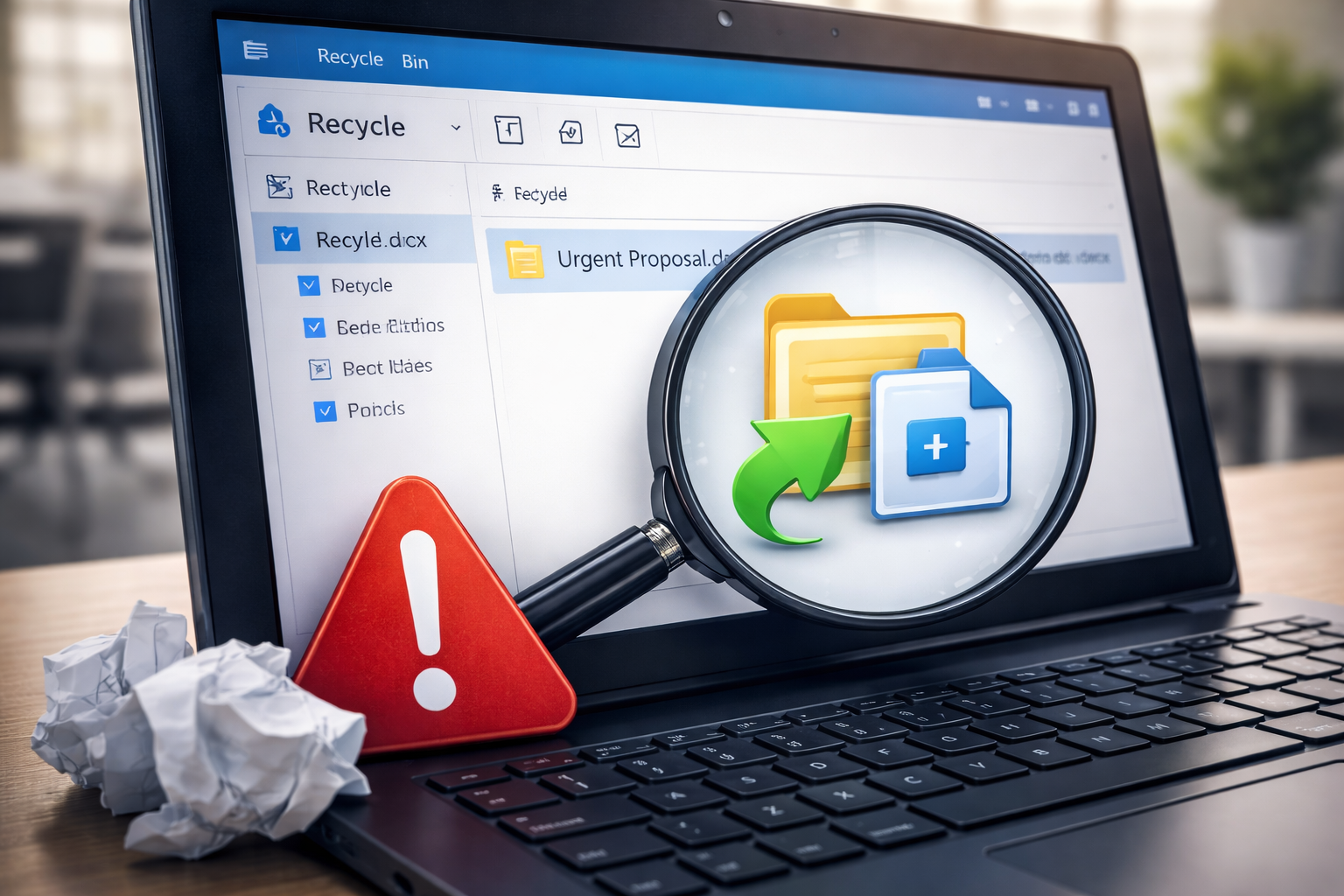
1) Check the Recycle Bin (fastest win)
- Open Recycle Bin on the desktop.
- Use the search box (top right) to type the file name (or part of it).
- Right-click the file → Restore.
It should return to its original folder location.
2) If it was a cloud-synced file, check the cloud trash
Common places:
- OneDrive: OneDrive Recycle Bin (web) / “Deleted files” area.
- SharePoint: Site Recycle Bin (often has a second-stage recycle bin).
- Google Drive: Trash (and shared drive/admin recovery in business accounts).
- Dropbox: Deleted files / rewind features depending on plan.
If the file lived in a synced folder, restoring it from the cloud is often the cleanest recovery path—especially for teams.
3) Search Windows the right way (it may have moved)
Sometimes a file wasn’t deleted—it was moved or renamed. Try a quick search:
- Open File Explorer and search the file name.
- If you don’t know the full name, search by file type: .pdf, .xlsx, .docx, etc.
- Check common places: Downloads, Desktop, Documents.
4) Check for “Previous Versions” (if enabled)
Some business PCs have Windows features enabled that can restore earlier file versions (through File History or System Protection/restore points).
- Go to the folder where the file used to live.
- Right-click inside the folder → Properties.
- Look for Previous Versions (if available).
- Open a version to confirm the file is there, then restore.
If you don’t see Previous Versions, it doesn’t mean you’re out of luck—just that this feature may not be configured on that device.
Quick clue:
If the file was in a shared folder or cloud-synced location, check the cloud recycle bin first. It’s often faster and less risky than device-level recovery.
5) Check your app’s built-in recovery (safe, quick)
Depending on the file type:
- Microsoft Word/Excel: look for “Recover Unsaved” or AutoRecover options.
- Adobe/Editors: some tools keep temporary backups or recent versions.
- Accounting tools: some keep backups automatically (varies by setup).
This is especially helpful when a file was closed unexpectedly or overwritten.
6) If it was on a USB/external drive: stop using that drive
External drives and USB sticks can be recovered in some cases, but they’re also easy to overwrite.
If the missing file is important, stop saving anything to that drive and get help.
When it becomes a bigger business risk
Deleted-file recovery becomes urgent when the file is tied to revenue, compliance, deadlines, or multiple users.
- It’s client work, invoices, contracts, or legal/HR documents (time-sensitive and high impact).
- It was in a shared folder and multiple people need it back quickly.
- The Recycle Bin was emptied or the file was deleted with Shift+Delete.
- The drive is acting “weird” (freezing, clicking, slow access, or frequent errors).
- It’s a key business database (accounting file, project file, CRM export).
- You’re unsure where it lived (local vs OneDrive vs SharePoint vs server).
The longer recovery waits—and the more the computer is used—the lower the chances of a clean recovery.
How AstroTech fixes this
- Fast triage: identify whether the file was local, cloud-synced, or on a shared location.
- Safe recovery steps first: attempt the least risky restore path (Recycle Bin, cloud restore, versioning).
- Recovery planning: reduce overwriting risk and preserve the best chance of retrieval.
- Business-friendly restore: help confirm you recovered the correct version and it opens properly.
- Prevent repeat incidents: set up better backup/versioning so the next recovery is painless.
FAQ
Can I recover a file after emptying the Recycle Bin?
Sometimes—depending on how much the computer has been used since. Stop saving new files and avoid installing tools. If the file matters, get help quickly to avoid overwriting.
What if I deleted a file from OneDrive or a shared folder?
Check the OneDrive/SharePoint recycle bin first. Cloud restores are often the easiest and cleanest option, especially if multiple users need the file back.
Is using a free “recovery tool” safe?
Not always. Installing recovery software can overwrite the deleted data you’re trying to restore, and some tools are risky or misleading. If the file is important, it’s safer to pause and let a technician handle it.
Why does file recovery get harder over time?
Because deleted files may remain recoverable only until new data overwrites the same storage space. Normal computer activity (downloads, updates, sync) can reduce recovery chances quickly.
What’s the best way to prevent this in the future?
Versioning + backups. If your team relies on important files, having cloud version history and a real backup strategy is the difference between a 2-minute restore and a major disruption.
